I live-tweeted my way through the Agile Meets Architecture in Berlin this April. A couple of months later, I revisited those notes, with distance and a clearer mind. Here are my takeaways.
TL;DR
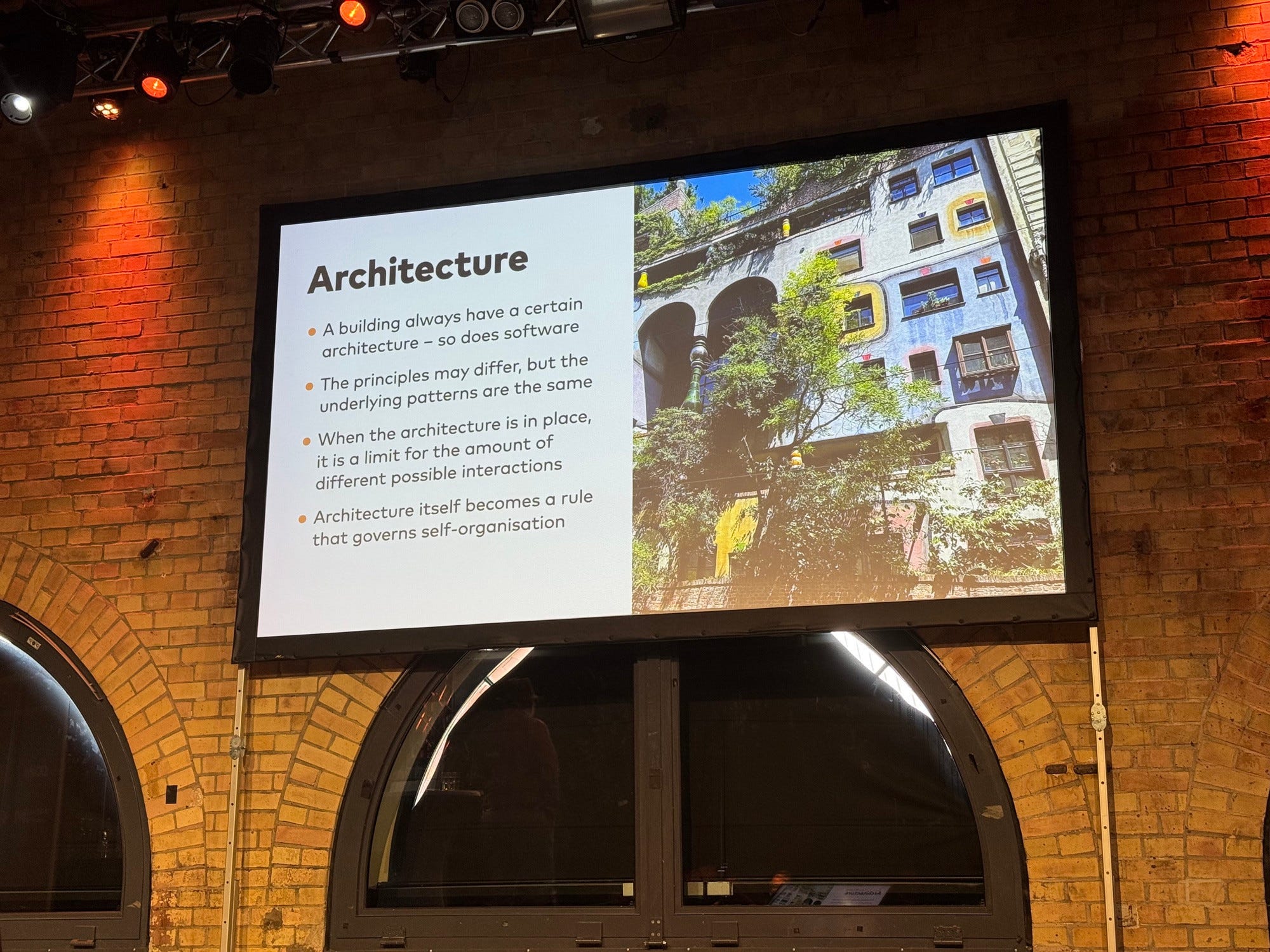
Architecture guides energy towards useful outcomes
We reach autonomy when our work is aligned with our values
Generalists are amplified with AI
One diagram, one message
Story estimates are guesses — don’t count on them. Count on feedback
Know yourself to serve better
Leadership: contribute, influence, take responsibility, be available
Architecture supports agility
Architecture is a living set of decisions
Architecture guides energy towards useful outcomes
Architecture limits the number of possible interactions. It defines the boundaries for self-organization.
In social systems, individual goals increase self-organization and shared goals reduce it.
Think of people in a train station, each moving independently (self-organized) towards their own destination. Once they converge on a platform (a shared destination) structure emerges.
The same applies to teams and systems. Self-organization is always there. Architectures guides energy towards useful outcomes.
We reach autonomy when our work is aligned with our values
Achieving autonomy, depends on enabling constraints. These are boundaries that limit freedom yet provide a structure that enables function.
For example, teams own their stack end-to-end (autonomy) and follow architectural principles (constraint). This lets them move faster and make better decisions.
Generalists are amplified with AI
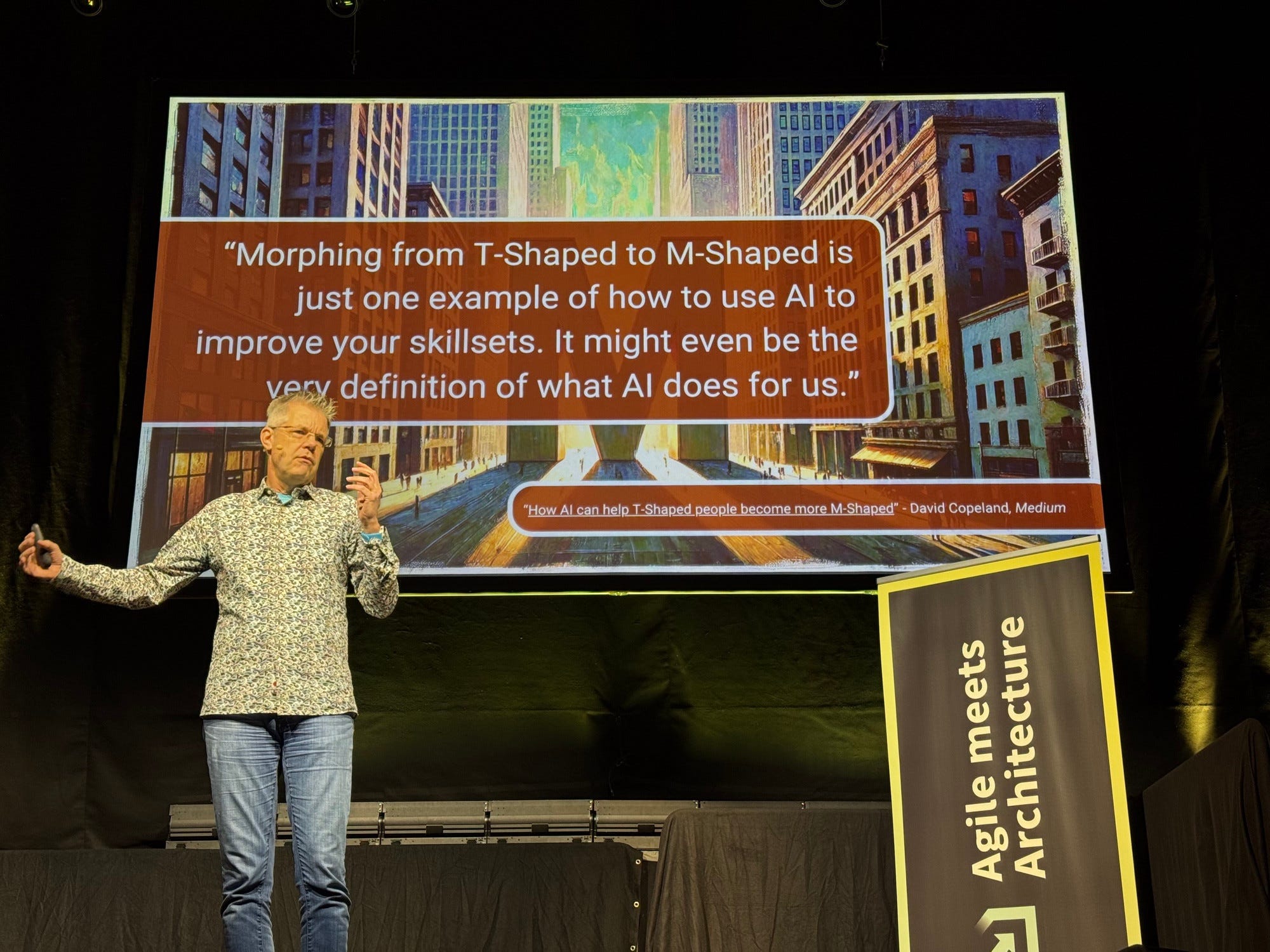
M-shaped people, those with multi-domain skills, can move ideas between boundaries.
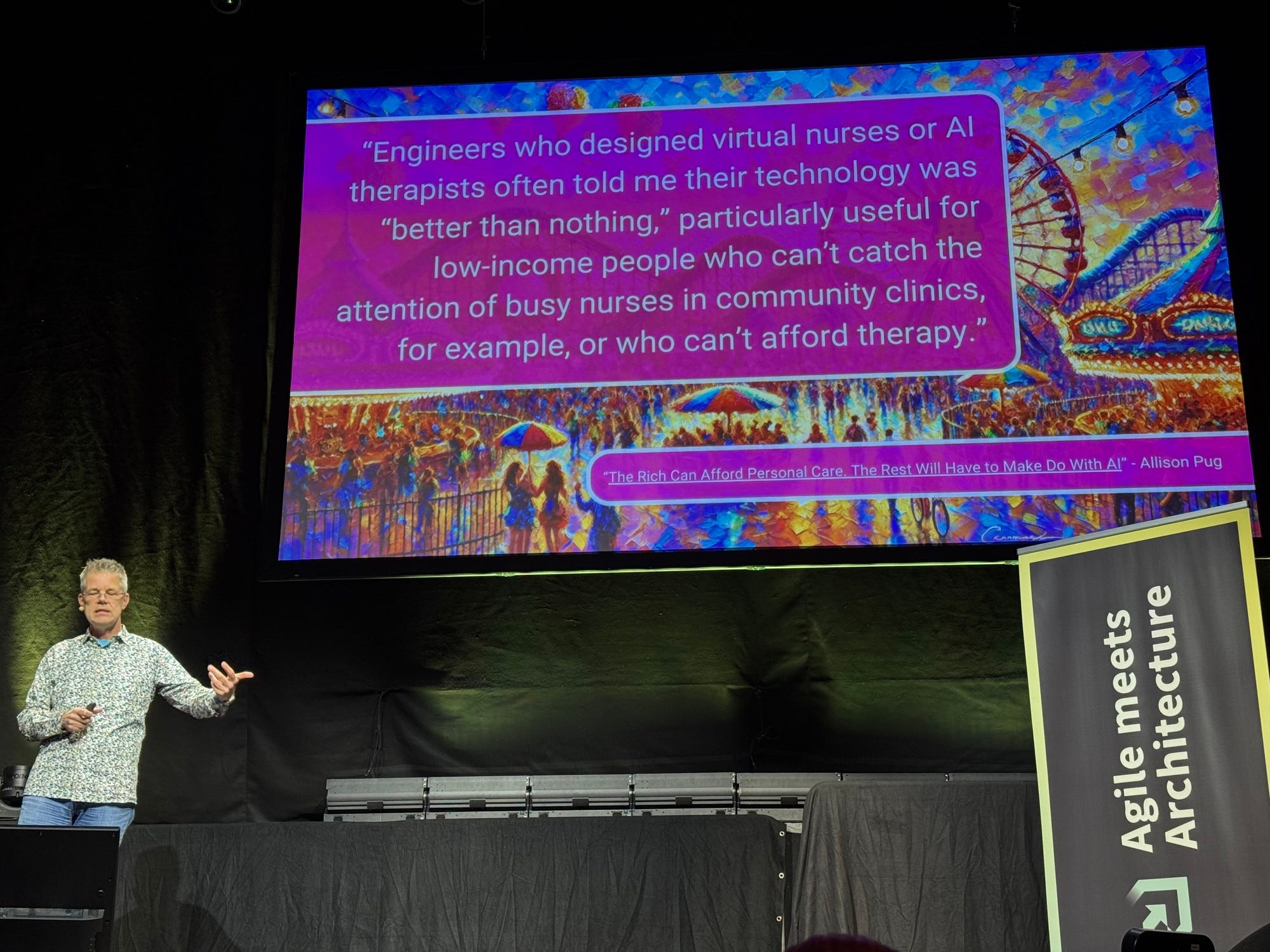
Human touch and attention are scarce; AI attention is better than nothing.
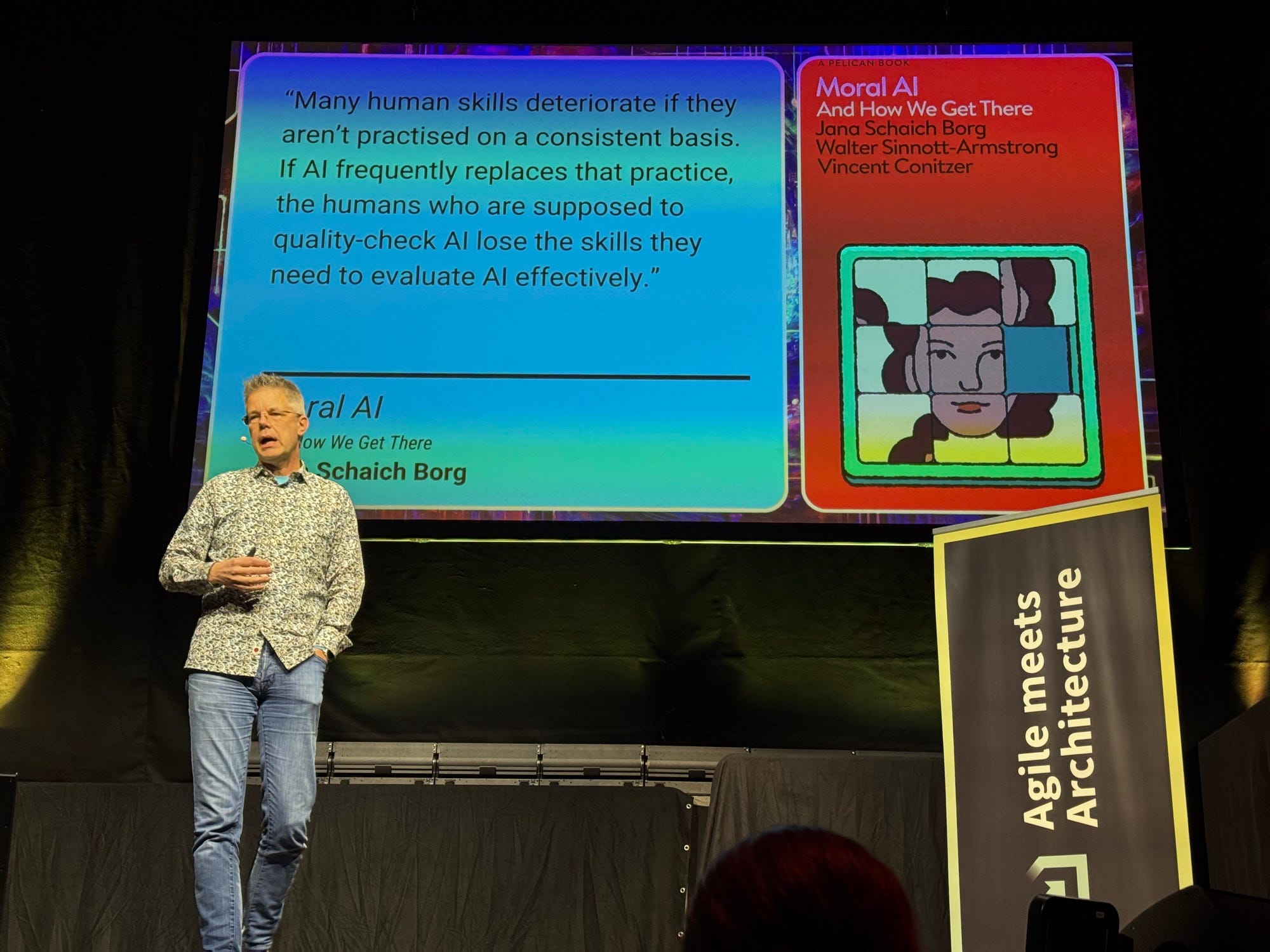
There’s magic in learning new skills, but automation has made us complacent. It’s a fine line between preserving human expertise and delivering value through automation.
One diagram, one message
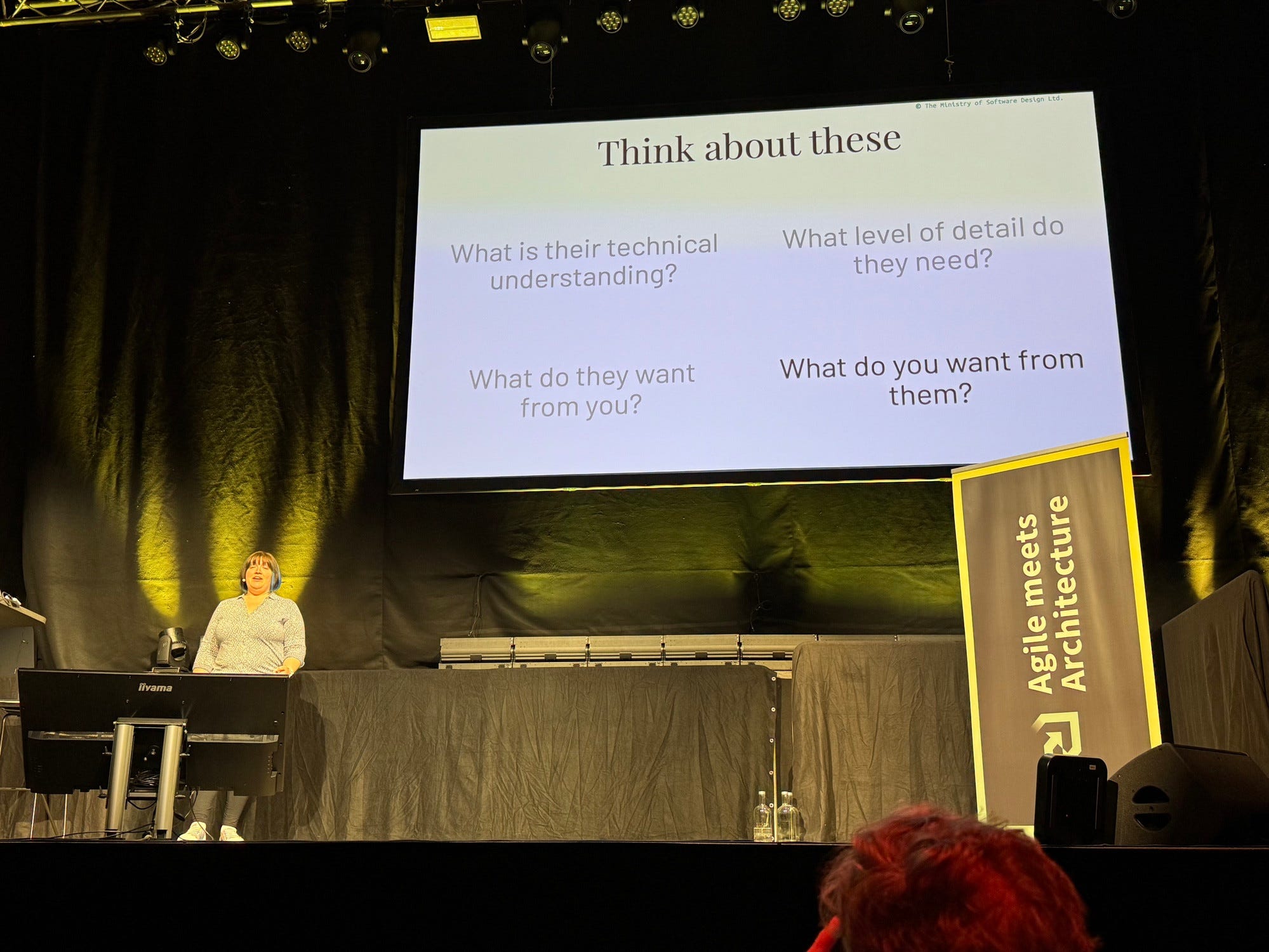
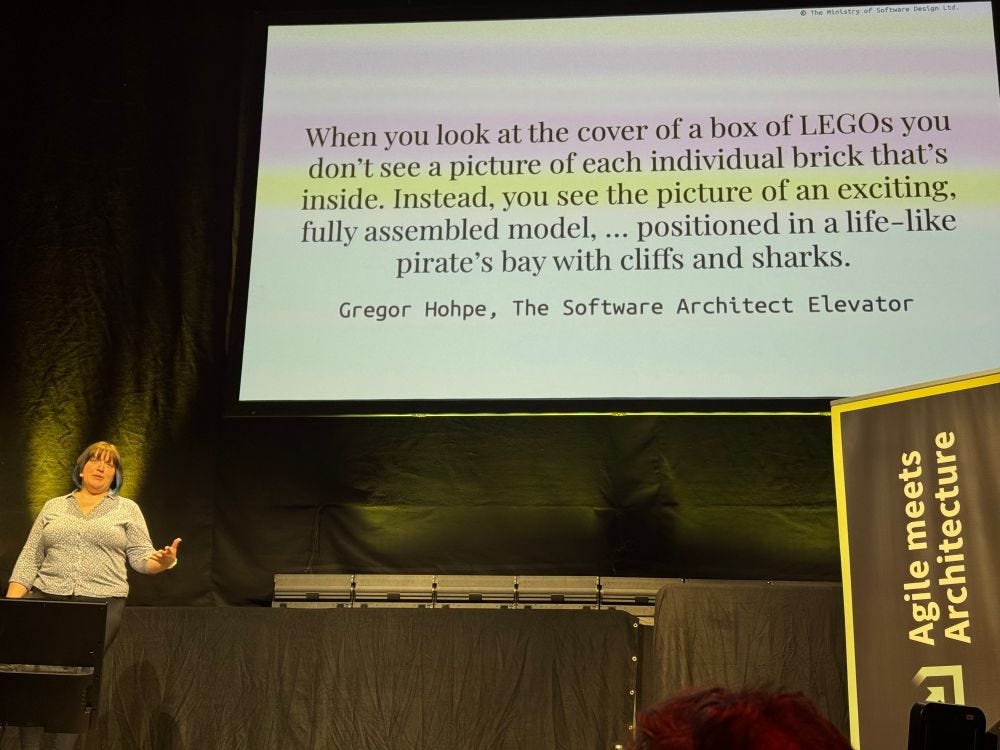
Diagrams are like writing, they should serve a purpose and know their audience.
Different audiences need different diagrams.
Don’t mix levels of abstraction, it causes confusion. One diagram, one message.
Use color with care; 4.5% of the world population has color deficiency.
Sequence diagrams should be simple; code changes frequently. Focus on actions, not functions.
Always provide context!
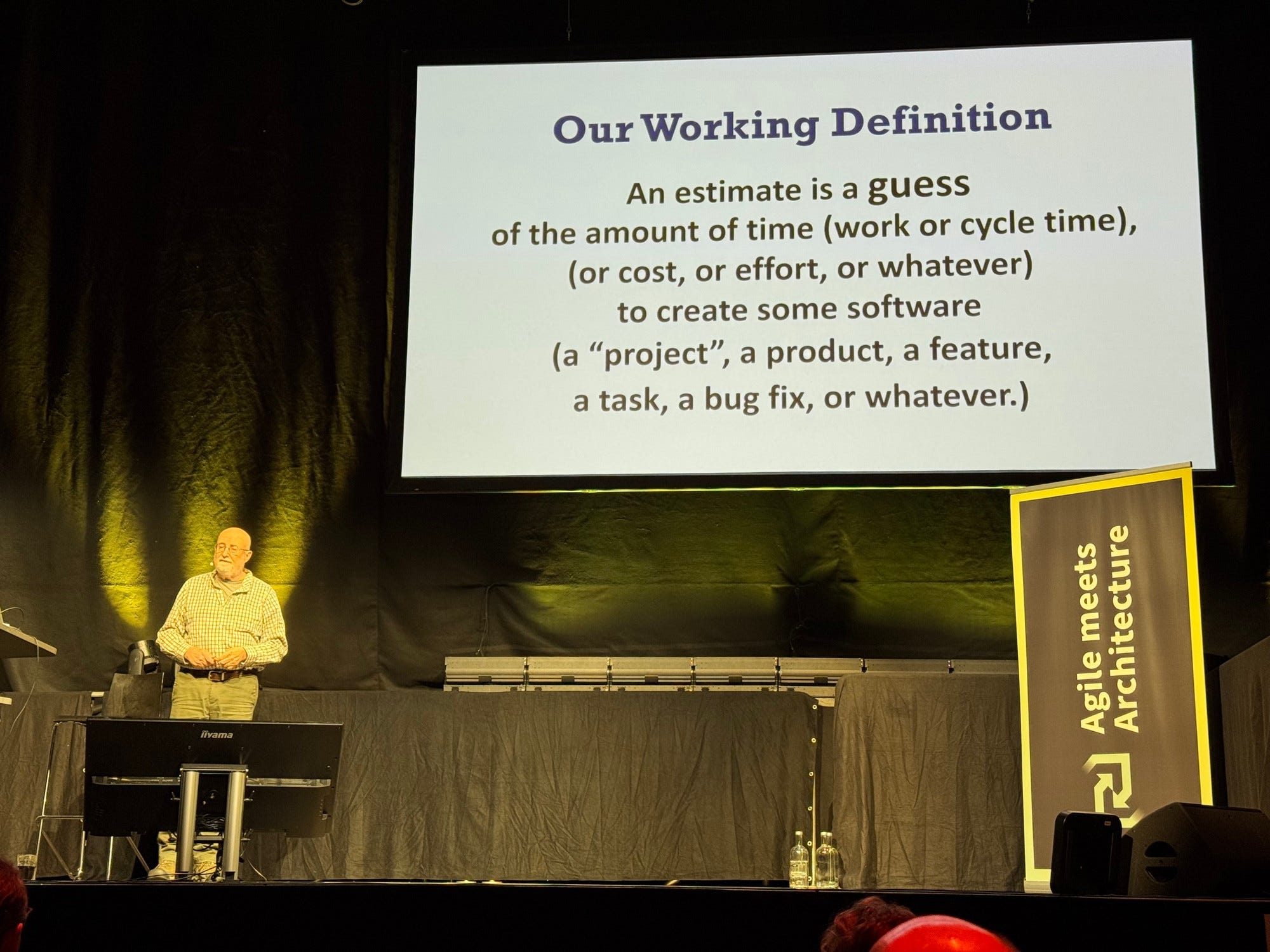
Story estimates are guesses — don’t count on them, count on feedback
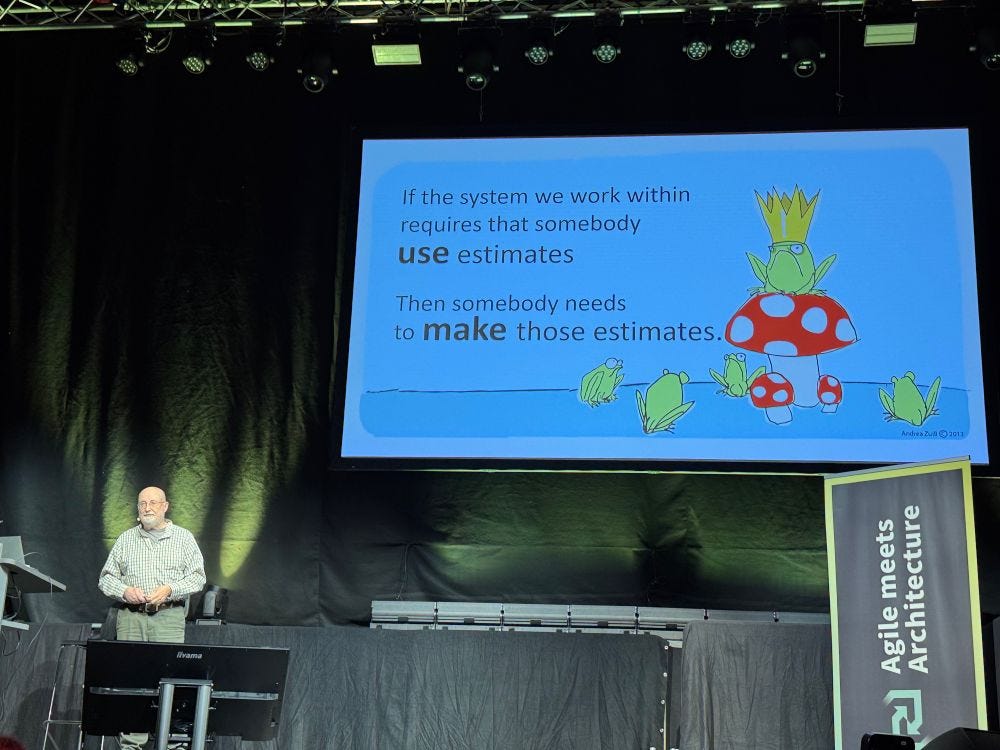
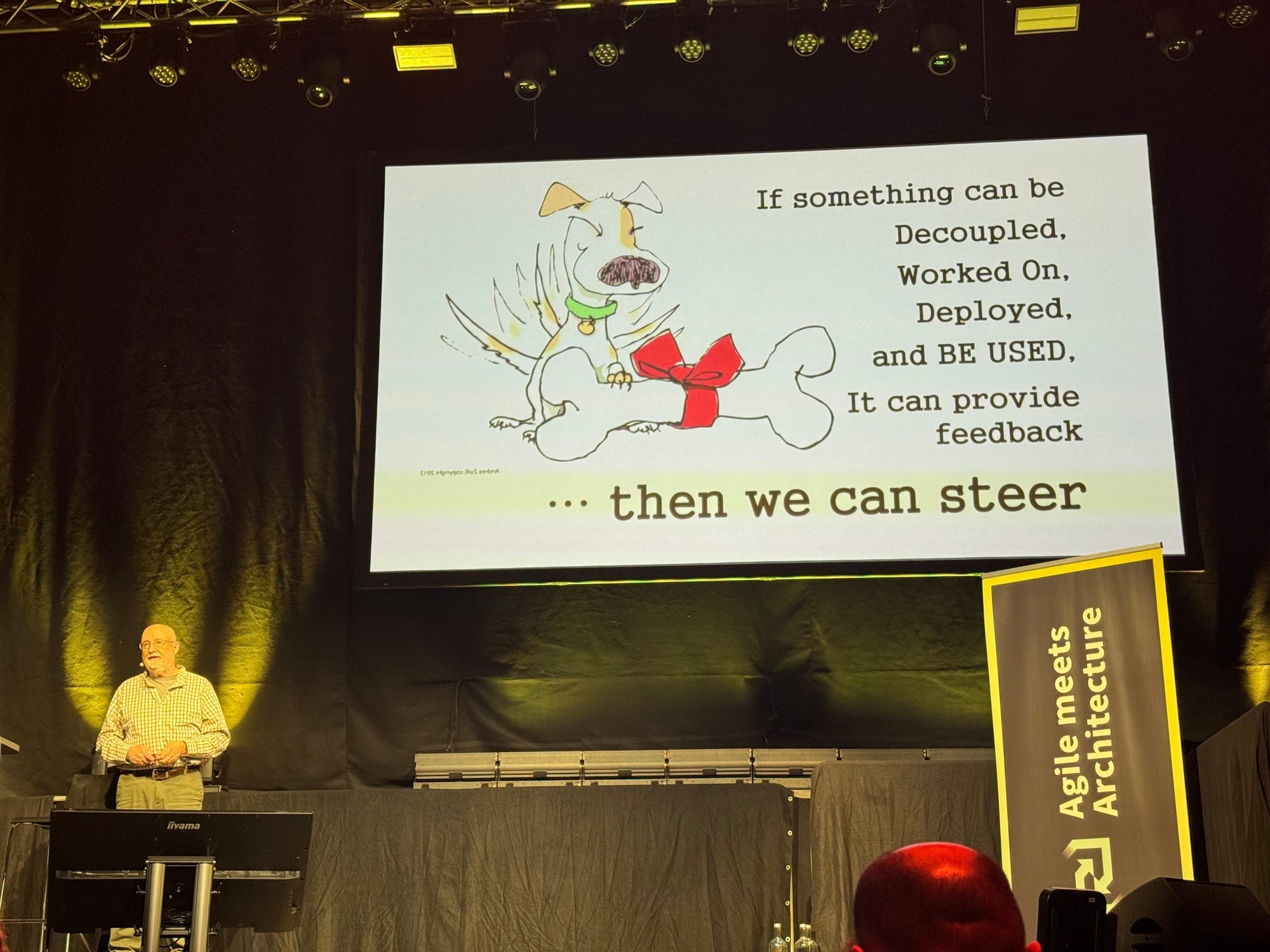
Estimates are often required but they are guesses. What matters more is steering. If something can be worked on, deployed, and used then it can produce feedback. And feedback is how we steer, with feedback we can decide.
Know yourself to serve better
Take time to reflect alone. Look inside and view yourself from the outside. That’s how you stay useful to others.
Do retros consistently. It’s all about us reflecting together.
Reduce distractions, cause we all pay with attention!
Leadership: contribute, influence, take responsibility, be available
Autonomous teams are shaped by culture, structure, and people who step forward.
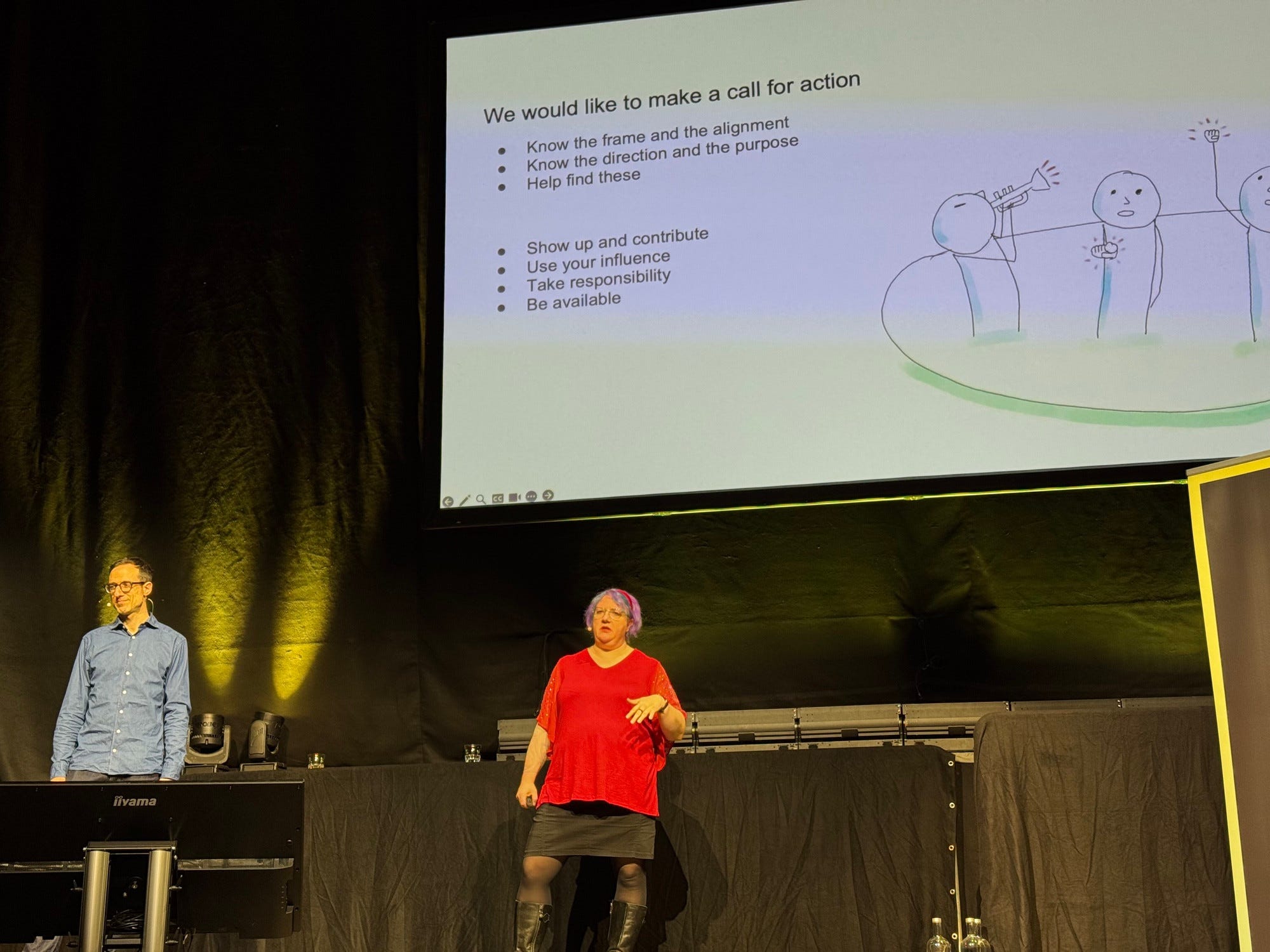
Being a good technical leader means stepping forward: contribute, influence, take responsibility, be available.
Speaking the languages of people is something we were not taught in university — we learned the languages of computers. Tech leadership means bridging the gap between humans and machines.
Juniors matter! They keep the pipeline going. They aren’t yet “damaged” by work and can ask questions from a fresh perspective.
Leadership is a skill that can be trained and must be practiced. Being a great technical leader implies taking risks when making decisions.
Architecture supports agility
Agility is about adapting quickly and delivering value continuously. Adaptation needs structure, and that’s where architecture becomes relevant.
If you’re the most experienced person on the team, help grow your teammates. A system is too large for one mind, it’s built, understood, and expanded by the team. Each member holds a part; together, they understand the whole.
Architecture is iterative, it evolves and expands.
Architecture is a living set of decisions
Leaders can influence without direct power. Take away a CEO’s power, are they still influential? If so, they’re a true leader. Leadership doesn’t require authority.
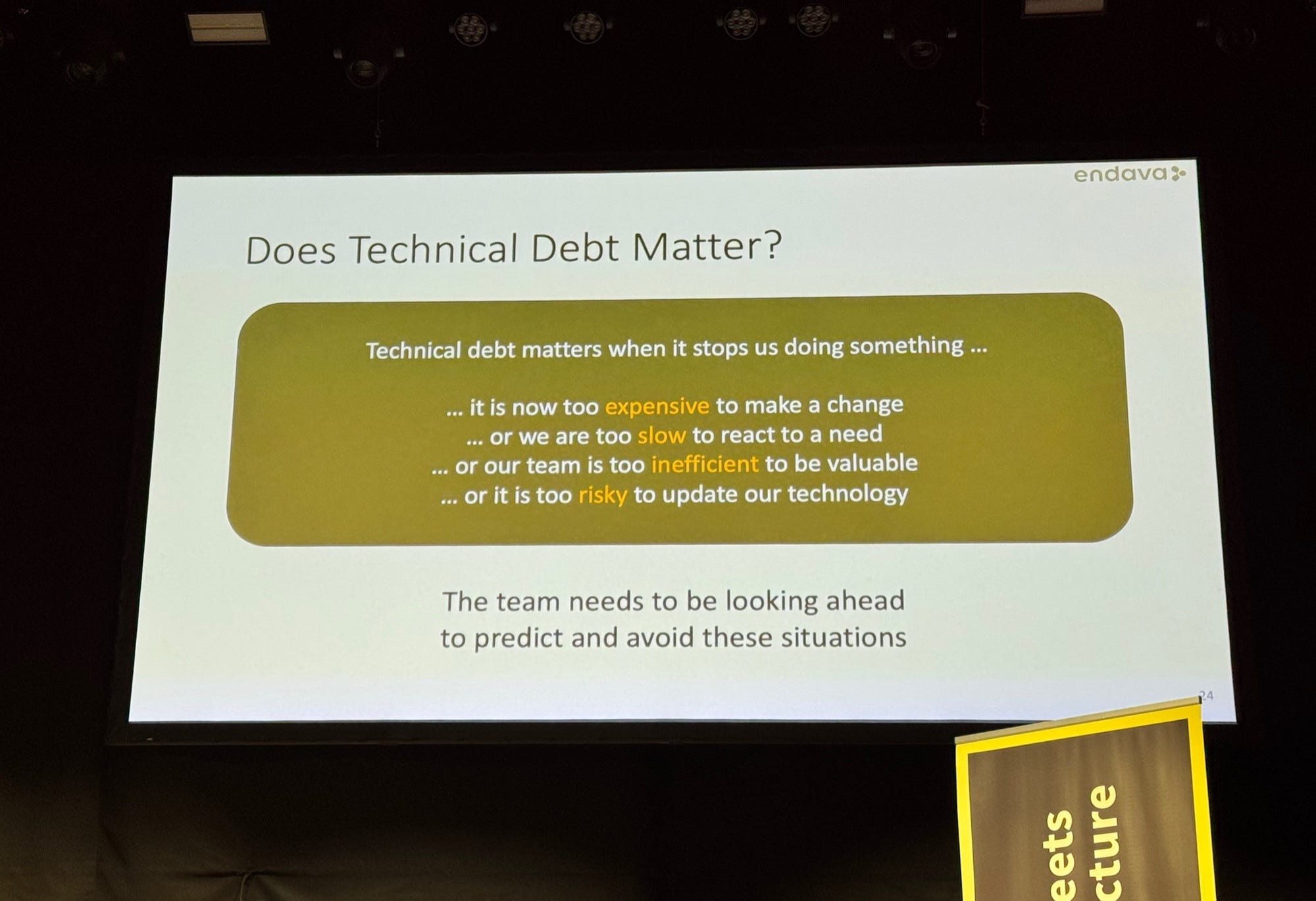
Tech debt becomes apparent when it prevents progress.